

SE2 have been the perfect partner. The team are passionate and committed, but also practical; they have an impressive eye for detail, and know exactly what delivers a successful project.
Jake Reynolds, CPSL and former senior advisor to Department for Education

Current Projects
The projects we have recently been busy working on are listed below:
We worked with the Climate Actioon team at the London Borough of Islington to engage a wide range of stakeholders in the development of ideas for a refreshed Climate Action Plan. Islington is one of the leading councils for climate action in the UK, but was looking to expand the scope of its climate action plan to include a greater emphasis on climate resilience and more widespread action across the community. We helped shape a stakeholder engagement plan which brought together major institutions and employers, local residents, community organisations and others to consider the types of carbon reduction and climate adaptation actions that would deliver meaningful change and wider community value. These ranged from large scale infrastructure programmes such as heat networks and hyperlocal projects around green spaces and food growing; an important part of our work was simplifying a complex landscape so that stakeholders felt confident joining the conversation. A further aspect of the project was working with internal Council stakeholders to look at the opportunities and constraints for further embedding climate action in existing services. We hope that our work has given Islington a positive pathway to even greater ambitions around climate.
Working closely with Gateshead Council and the other North East local authorities, we helped to consider how the region could develop and grow a local skills base for the rollout of heat networks. This included mapping the timeline of heat network delivery in the North East across a series of stages; identifying the skills needs for each stage and the types of organisations where those skills might sit; mapping existing businesses that could expand or diversify into those skills areas; and engaging with colleges, training providers and the supply chain to understand pathways for training development and delivery. We were able to work closely with stakeholders through a series of workshops and a major regional conference, bringing to light the challenges faced by the supply chain with regard to market certainty and the time cost of training as well as opportunities for collaboration between different actors in the system, for example, collaborations between social housing providers and colleges to train technical staff.
Declarations of Climate Emergency at national and local level have helped to sharpen people's focus on the need to act now to tackle climate change. Action will mean accelerating the pace at which we install decarbonisation measures and technologies, from insulation to heat pumps to EV charging. A major challenge: we do not have enough people to do the job. A second challenge: recruiting, training and deploying new people takes time, and the decarbonisation sector has to compete with other parts of the economy to attract, reward and retain people.
During 2021, we have worked alongside the team at ACE Research to explore these issues in London, on behalf of the GLA. We have looked at the current supply chain landscapes, using SIC code analysis, data sets from trade bodies, and interviews with supply chain organisations and training providers. We have mapped future scenarios for the deployment of different technologies in London and the supply chains that are needed to enable these. And we have developed a set of recommended actions to help the capital achieve its goals of a supply chain that can deliver decarbonisation at the scale, pace and quality that is needed.
An area of particular emphasis has been how the decarbonisation sector can support a green and fair recovery for London from COVID (and addressing longer term structural inequalities that COVID has brought into sharper focus). We delivered specific analysis and recommendations around equality, diversity and inclusion in the decarbonisation supply chain to develop an industry which best represents and supports the city that it serves.
Liz and Rachael have always had a geeky soft spot for heat networks... and it's great that the last few years have seen sustained commitment from national and local governments to the creation of a thriving and competitive market for district heat in particular. One option that's now being considered by Government is the introduction of heat network zones, areas where connection to a heat network could be mandated if it is both low cost and low carbon.
We've been working with CSE and ACE Research to carry out research among people who live or work in areas that could fall into a heat network zone. BEIS wanted to understand more about the attitudes towards heat networks and zoning of different types of people - including residents, public sector building managers, social housing providers, local authorities commercial property owners and businesses. We focused on six cities around England and carried out a number of deliberative workshops, focus groups and a large scale survey (through a market research partner) to gather a large body of evidence. We looked at people's knowledge and understanding of heat networks and their attitudes towards zoning. We also explored the factors that would make them more or less likely to connect to a heat network, the opportunities that they saw from heat networks and the barriers to change.
It's been a fascinating study, very wide-ranging and, we hope, helpful to BEIS in its consideration of heat network zoning as a future policy option.
Social housing has always been at the forefront of efforts to improve energy efficiency, roll out renewable technologies and deliver clean and affordable energy to its customers. We've worked closely with the social housing sector over many years, from developing the first ever carbon footprint for the supported housing sector, to Rachael's time as Head of Sustainability at Southern Housing Group, to the development of our sister company Chirpy Heat and the Innovate UK funded Heat Manager service.
Our work has always involved helping to translate the technical and operational requirements of retrofit into the language and culture of social housing. We are currently working with the GLA and Turner and Townsend to develop a Knowledge Hub as part of the Social Housing Retrofit Accelerator, a fully-funded support service to help social housing providers across England successfully bid into the Government’s Social Housing Decarbonisation Fund.
It's been great going back to our roots - writing guidance in ways which will be accessible and meaningful to its audience and bringing together our understanding of domestic energy efficiency and the culture, operation and management of social housing. You can explore the Knowledge Hub at https://www.socialhousingretrofit.org.uk/
270 local authorities declared a climate emergency in 2019, and now they need to work out how to deliver on their zero carbon promises.
We have already worked with local authorities in London, Somerset and the West Midlands to help them understand what will need to be done to meet their net zero targets and how they can engage with both elected members and local residents and businesses around the climate debate. We are now working with local authorities across Staffordshire and Bedfordshire to help them on their journeys to net zero.
We're delighted that we continue to work with with Aether, world experts in environmental data analysis and interpretation and the brains behind lots of national and international greenhouse gas reporting.
Working with Hoare Lea and City Science, and building on a schools energy efficiency project we worked on them with in 2018/19, SE2 is providing stakeholder engagement support to BASEE, a BEIS-funding project to to build an on-line marketplace for energy efficiency investment aimed at offices and warehouses. Phase 2 funding has just been approved, enabling us to further develop the tool, focussing our offering is at the building level where implemented changes can make the most impact. Energy efficiency will be offered as a journey which starts with quick wins, builds trust with the property owner through the demonstration of value by proper monitoring of energy use.
 At the beginning of 2019, we joined forces with Nicholas Doyle and Will Routh and formed a sister business called Chirpy Heat, offering strategic advice and support to social housing providers with their district and communal heating. Together, we've been at the sharp end of heat networks, and we know all the headaches that social housing providers can suffer - from poorly performing plant, to debt and customer complaints. We offer a 'plant room to boardroom' service, helping social housing providers to steer their way through the heat network jungle. Recent work has included metering and billing reviews, portfolio planning and internal capacity building for housing clients including Hyde, Optivo, Octavia, Stonewater, Riverside and Home Group.
 Alongside the consultancy work, we also facilitate The Heat Network, a peer group of social housing providers who meet to discuss and share good practice about district and communal heating. We currently have 13 housing association and 6 local authority members, as well as representation from the National Housing Federation. Collectively, we represent over 80,000 homes on over 900 heat networks, 7% of all heat networks as defined by BEIS and 17% of all customers: a voice to be listend to!
 The District Heating Diva's is possibly our most fun project! It's an informal networking group for women working in heat networks, that started with monthly breakfasts in London but has now also spread to the Midlands, the North, the South-West and Scotland: a Young Professionals group is about to start too! We had a VERY awesome conference in December 2019 and are also launching a mentoring scheme called Heat Exchanger. For more information and to get invovled, join us on LinkedIn.
We are currently working with the Vanguards District Heating Network, a network of local authorities and other public sector bodies at the forefront of delivering district heating schemes in the UK. The network - convened jointly by Michael King and Professor Jan Webb from Edinburgh University - brings together its members and industry partners to share experiences and expertise on different aspects of heat network development. SE2 has managed the logistics and administration of four network conferences, the most recent of which was in Leeds in January 2018 discussing how to build your business case for district heat. You can find out more about the Vanguards District Heating Network - and see papers from pervious conferences - at http://www.heatandthecity.org.uk/dh_vanguards_network.
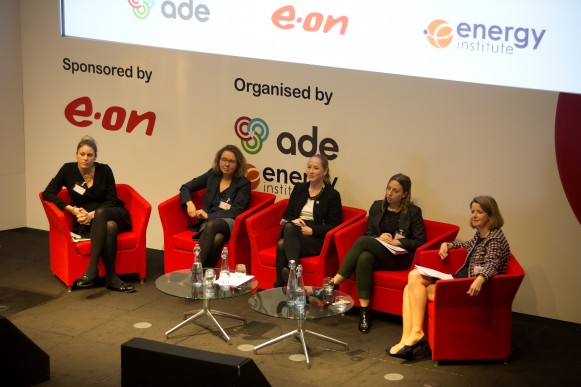 We have been the event managers for the Heat and Decentralised Energy Conference since it started in 2012. Working with both the Association for Decentralised Energy and the Energy Institute, we provide a complete events service, managing the venues, speakers, delegates and sponsors.
Heat and Decentralised Energy 18 took place on 29th November. The calibre of presenters and panel, together with the interactive format of our event (presentations, panel discussions and group workshops), inspired some lively debate on the pace of change needed to deliver the smart energy transition and how businesses and other organisations can take advantage.
The next event will will take place on 25th March 2020, once more at The Crystal, and we're delighted to be working with the ADE and EI once more.
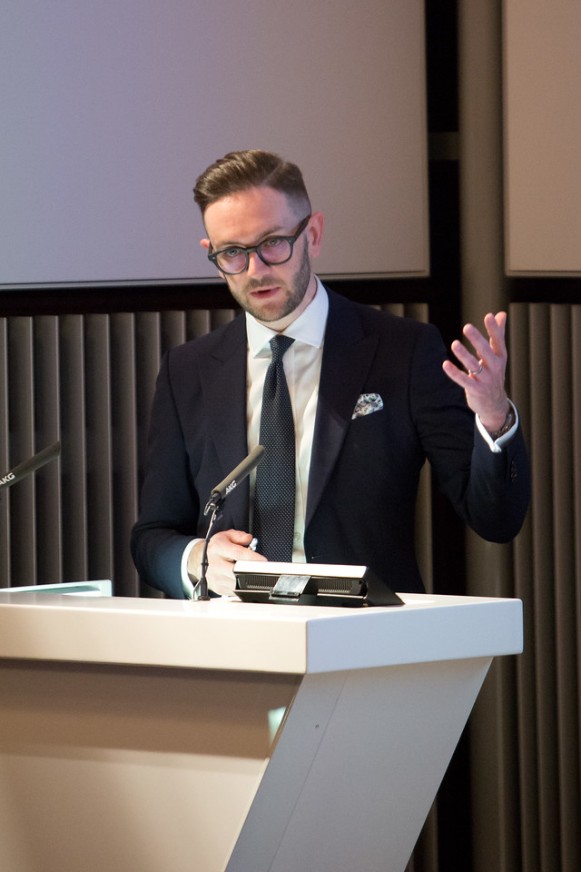 In 2019 we event managed the inaugural conference for the Carbon Capture and Storage Association (CCSA): Capturing the Clean Growth Opportunities. The conferenece brought together nearly 200 people from the CCUS sector, including industry providers, potential customers, policymakers, investors and researchers, to discuss the ambition, leadership and scale necessary if the UK is going to capitalise on the opportunities presented by carbon capture, usage and storage. Plans are already underway for the 2020 event, to be held in the autumn ahead of COP26.
 We've been working with the Association for Decentralised Energy (ADE), delivering their industry leading awards and gala dinner, since 2008 so we know them as a client very well! The 2019 Award Dinner took place at The Guildhall London, recognising and celebrating the people and projects of decentralised energy from the past 12 months.
We provide end-to-end event management for both the awards and dinner, from developing the awards process and collating entries, to booking the venue and organsing a seating plan for 450 guests. You can find a list of the 2019 award winners here and see all the photos from the event here.
Since 2012, SE2 has provided secretariat services to both the London Association of Local Energy Officers (ALEO London) and the London Boroughs Energy Group, putting us at the heart of the sustainability agenda in London. They're long term relationships that we're proud of. We coordinate meetings, produce minutes, manage membership and fees, and disseminate information throughout the year, playing our part in helping to share best practice and widen the knowledge and capacity of London's local authorities.